Arkansas History: Researchers Continue Uncovering Details of Lakeport Plantation
The 1850s Greek Revival home in Chicot County remains a museum, with historians working to identify the enslaved people who lived there and trace the property's post-war economic shift.
By Adriana Abebe ·
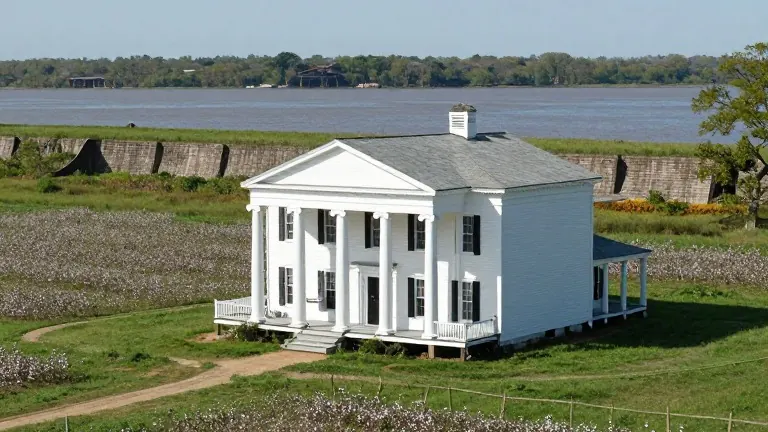
Located in the southeastern corner of Arkansas, the Lakeport Plantation stands as the only remaining plantation house in the state that still faces the Mississippi River. The structure has operated as a museum for nearly two decades, serving as a heritage site for Arkansas State University.
Joel Johnson established the property in 1831 after selling his home and grist mill in Scott County, Kentucky. He purchased land in Chicot County to start a cotton operation. By the time of his death in 1846, Johnson owned approximately 95 enslaved people. His son, Lycurgus Johnson, inherited the bulk of the property and expanded the holdings during the cotton boom of the 1850s.
Lycurgus Johnson owned more than 4,400 acres and 155 enslaved individuals by the late 1850s. He began constructing the main house near a river oxbow, naming it for a local steamboat landing. The Greek Revival style home features 17 rooms and covers about 8,000 square feet. It was built on an elevation to protect against flooding, and the front porch originally offered a clear view of the river, a sight now obscured by a large earthen levee.
Ruth O'Loughlin, the museum director, noted that active research continues at the site. She stated that historians do not yet know the names of everyone who was enslaved there. The grounds included separate dwellings where the enslaved people lived. The house was completed just before the Civil War, and the property experienced the economic turmoil that followed the Union's control of the Mississippi River.
Union soldiers visited Lakeport in 1863 or 1864 and took the plantation's mules, horses, and cattle. A guerrilla war ravaged the county as Confederate and Union armies foraged for supplies. After the war, Lycurgus Johnson secured his formerly enslaved workers as laborers, and cotton farming resumed. By 1870, the plantation produced about 600 bales of cotton annually, which was half of its pre-war output but still profitable.
The property remained in the Johnson family until 1927. Russian immigrant Sam Epstein bought the house and land for $30,000. His family expanded the plantation to 13,000 acres. The house was abandoned for more than 30 years because the cost of renovation became prohibitive. In 2001, Epstein's grandson, Sam Epstein Angel, donated the property to Arkansas State University.
Angel made the donation after visiting the Hemingway-Pfeiffer House in Piggott, a restoration project that impressed him. The university reopened the Lakeport Plantation to the public in 2007. The site now attracts thousands of visitors each year. O'Loughlin described the ongoing work of piecing together the site's history as a passion of hers, noting that the research will continue to add to the known narrative of the landmark.