Bomb Threats Divert Dozens of European Flights to Military Bases
Aer Lingus and Finnair aircraft landed in France and Italy under military escort after emails from an anti-feminist group triggered emergency protocols.
By Adriana Abebe ·
European air travel experienced widespread disruption on Thursday as bomb threats forced more than a dozen flights to make emergency landings or receive military escorts. Authorities confirmed that no hazardous or suspicious materials were found on the targeted aircraft. A British official characterized the incidents as malicious hoaxes.
An email sent on behalf of a group identifying as anti-feminist targeted planes bound for Rome. An official from another European airport stated that a similar threat used the same language. It remained unclear if the same group sent both messages. The threats arrived during a period of heightened geopolitical tension, with warnings that Russia might increase hybrid threats in the region.
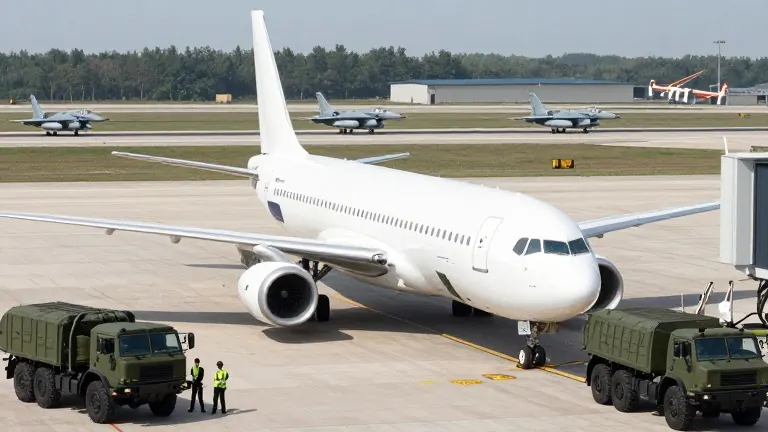
An Aer Lingus flight from Dublin to Rome diverted to a military air base in Evreux, France. French Prime Minister Sébastien Lecornu’s office said warplanes intercepted the aircraft because the pilot did not cooperate as expected with authorities. The base went on high alert, and military bomb disposal teams examined the plane. Regional prosecutor Remi Coutin said investigators were questioning the pilot and co-pilot.
Italian air force fighter jets escorted a Finnair flight from Helsinki to Rome after receiving an email threat. Finnair said two of its flights faced unfounded hoax bomb scares. One flight landed safely in Rome, while another operated by Jettime landed in Vienna and was expected to return to service after inspection. Three Ryanair flights bound for Sofia, Bulgaria, also received military escorts and made emergency landings. Two landed in Sofia, and one from London diverted to Plovdiv.
Philip Baum, a visiting professor of aviation security at Coventry University, estimated that each flight disruption could cost airlines up to $250,000. These costs include overtime for crews, replacement staff, and missed passenger connections. Baum noted that military escorts add further expenses, which governments bear rather than airlines. Jacob Funk Kirkegaard of the Bruegel think tank said the threats appear designed to sow chaos and test how European governments coordinate their responses.
European Union Transport Commissioner Apostolos Tzitzikostas told reporters in Dublin that it was too early to determine if the incidents were linked. He stated that national investigations remained ongoing and that an EU information-sharing mechanism on aviation security had been activated. Britain's transport secretary Heidi Alexander described the events as malicious hoax threats affecting flights across the continent.
Similar threats had targeted flights earlier in the week, including aircraft operated by LOT Polish Airlines, Scandinavian Airlines, Wizz Air, and Ryanair. Czech police searched four planes in Prague and found nothing. A Wizz Air flight from Milan to Bucharest and a LOT flight from Warsaw to Brussels also underwent inspections that revealed no dangerous items. An Air Serbia flight to Bucharest resumed operations after a similar check.