Breaking: AI Bubble Fears Trigger $2.5 Trillion Nasdaq Loss in Election Aftermath
Democratic wins on data center restrictions collide with deepening doubts about AI returns, sending tech stocks into their steepest decline since April 2025.
By Marta Gray ·
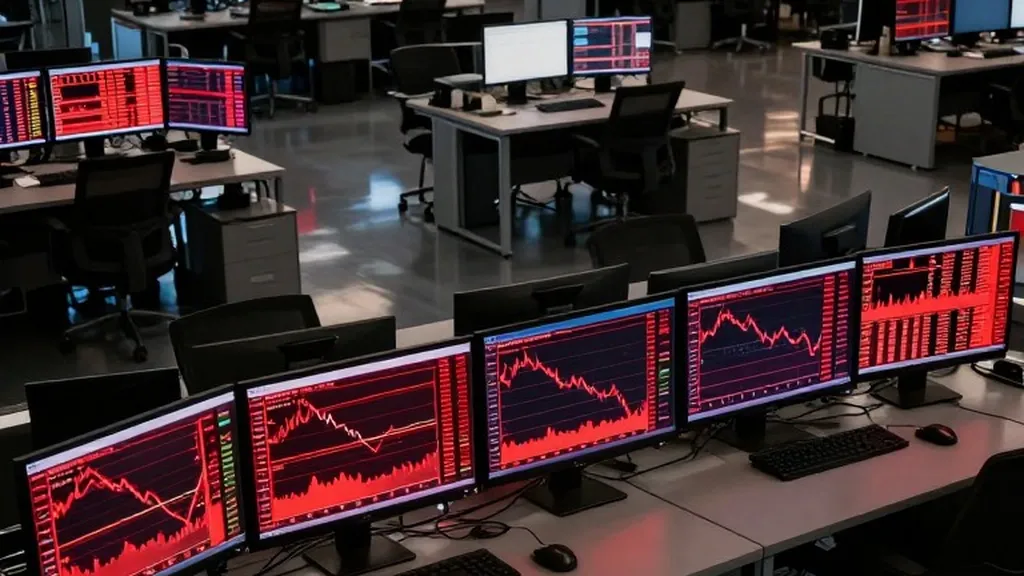
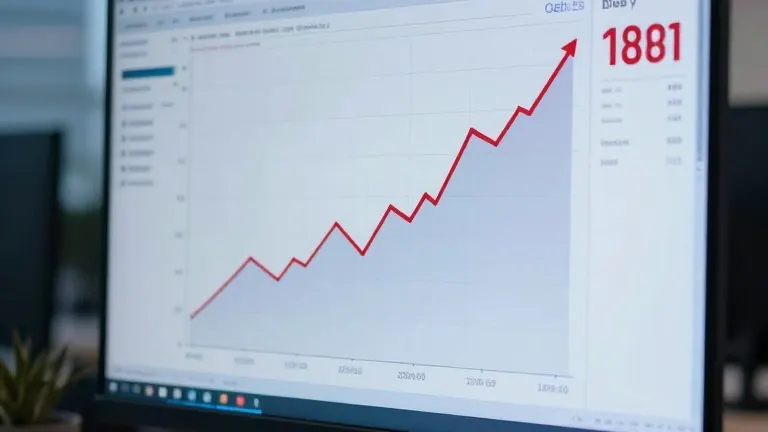
Savers and 401(k) holders faced a stark reality check on Thursday as the US stock market suffered its most significant single-day loss in over a year. The Nasdaq Composite, heavily weighted toward technology and artificial intelligence firms, plummeted 5.5 percent, marking its worst performance in eighteen months. This sharp decline erased an estimated $2.5 trillion in market value. The S&P 500 also fell 4.3 percent, while the Dow Jones Industrial Average dropped more than 1,800 points, a 3.4 percent loss that wiped out all gains made the previous day.
The selloff was driven by a perfect storm of political shifts and lingering doubts about the profitability of the AI boom. Democrats secured a sweep of both the House and Senate in Tuesday's midterm elections, a result that market analysts say signals a new era of regulatory scrutiny for the technology sector. Voters in key states, including Texas and Ohio, rejected local measures to expand data centers, a move that directly threatens the infrastructure backbone of the current AI investment cycle. This political shift forced investors to reevaluate the trajectory of the tech sector, which had been the primary engine of market growth in recent years.
The core of the panic lies in what analysts are calling the AI reckoning. For years, investors have poured vast sums into AI infrastructure, betting on transformative returns. However, fresh panic has emerged over whether these investments will actually deliver the promised financial gains. Susannah Streeter, chief investment strategist at Wealth Club, noted that fears about the returns on AI infrastructure are now colliding with the prospect of a sharp slowdown in data center construction. This dual pressure has created a fragile environment where any negative news can trigger aggressive selling.
Industry leaders expressed surprise at the intensity of the public backlash against data centers, a sentiment that had been building since before the election. Greg Brockman, president and co-founder of OpenAI, spoke at the WSJ Tech conference in Napa, California, on Wednesday evening. He acknowledged that the industry had underestimated the local opposition to new facilities. Brockman stated that the shift over the past year has been a realization that building infrastructure in places like Texas and Georgia cannot be managed solely through digital communication. He emphasized that the industry needs to be physically present in those communities to build trust.
Dina Powell McCormick, president of Meta, echoed this sentiment at the same conference. She argued that the industry has not done enough to explain the benefits of AI to the general public. McCormick stated that the sector needs to double and triple down on telling the story of why these technologies matter. Her comments highlight a broader industry effort to manage public perception, a task that has become increasingly urgent as local ballot measures continue to target data center projects.
The market reaction was immediate and severe, particularly among the so-called Magnificent Seven technology companies. These firms, which include Apple, Nvidia, and Tesla, shed approximately $1 trillion in value in a single trading day. Nvidia, a key supplier of chips for AI development, fell 9.2 percent, losing more than $400 billion in market value. The Philadelphia Semiconductor Index, which tracks major chipmakers, dropped more than 12 percent. This index is now nearly 40 percent below its peak in June, indicating a sustained period of weakness in the hardware sector that supports AI growth.
Volatility reached historic levels as traders scrambled to protect their portfolios. The Cboe Volatility Index, often referred to as Wall Street's fear gauge, jumped as much as 5.7 points to above 28, its highest reading since March 31, 2026. By midday, nearly 800,000 VIX call options had traded, a volume 3.5 times the 30-day average. This surge in trading activity suggests that investors are aggressively hedging against further downside risk. The 10-year Treasury yield fell to 4.83 percent as investors sought the safety of bonds, a classic flight to quality that often accompanies equity market crashes.
Analysts are divided on the long-term implications of this crash. Dan Ives, a tech analyst, warned that Democratic control of Congress will create major hurdles for AI legislation over the next two years. He described the midterm results as a clear sign that the pace of data center build-out will start to slow. Conversely, Gene Goldman, chief investment officer at Cetera Financial Group, suggested the sell-off may be exaggerated. He predicted a recovery, noting that corrections in bull markets are typically short-lived and that a bounce back is likely soon.
Historical data offers mixed signals for investors. Frank Cappelleri, founder of CappThesis, pointed out that the Nasdaq was higher twelve months after the election in all but one of thirteen midterm cycles since 1974. However, he cautioned that the path to recovery can be volatile. In 2018, the Nasdaq rallied the day after Democrats won the House, but a sharp sell-off followed in December. On average, the Nasdaq gained 9.41 percent in the three months after a correction bottom, but the January 2022 correction was an exception where the index lost another 18.3 percent over the next six months.
More Business · Consumer Watch · Report a business · Got a Story?