
Breaking: Data Center Demand Ends Grid Shoulder Season Reprieve
A federal emergency order empowered PJM to force data centers onto backup power as constant digital loads collide with traditional maintenance windows.
By Adriana Abebe ·
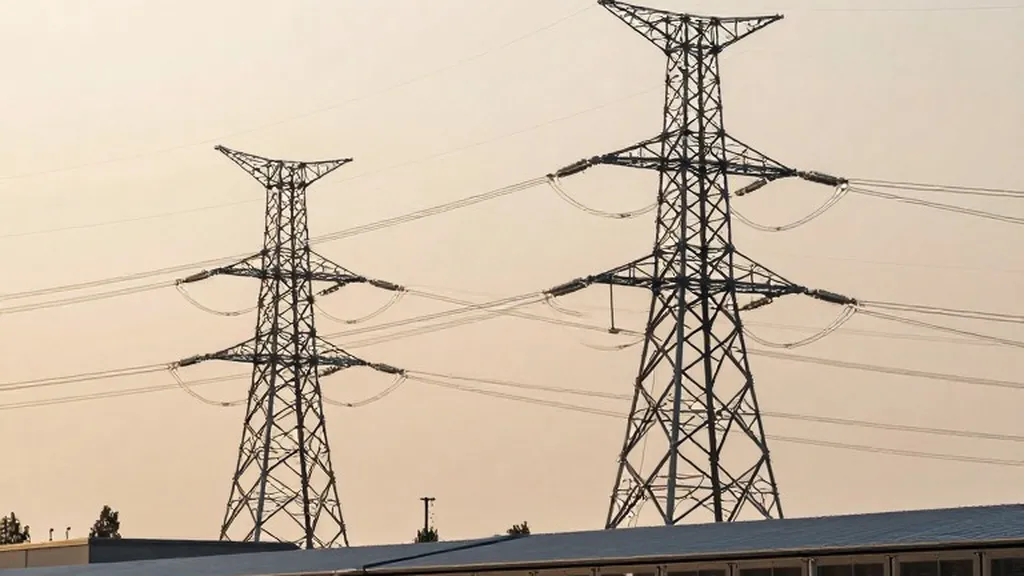
The United States Department of Energy declared a power grid emergency across thirteen states and the District of Columbia on Sunday, October 12, 2026. Energy Secretary Chris Wright issued the order under section 202(c) of the Federal Power Act, granting PJM Interconnection temporary emergency authority to keep the regional grid stable from October 13 through October 16. The primary driver of this strain was the rise of data centers, which have introduced a new reality to grid management where demand no longer drops with the weather. These facilities operate on a twelve-month, twenty-four-hour basis, creating a constant load that outpaces the traditional seasonal patterns used for planning.
PJM explicitly noted that the shoulder season reprieve is not what it used to be. Historically, this period between summer and winter saw lower electricity demand, allowing generator and transmission owners to take equipment offline for necessary maintenance and upgrades. Most scheduled outages are prohibited in the summer peak, which ended in mid-September. However, the consumption from energy-intensive large-load customers, particularly hyperscaler data centers, does not fluctuate with temperature. This expanding demand is outpacing new transmission and electricity supply coming onto the system, meaning unseasonably hot or cold weather now arrives without the buffer of lower baseline consumption.
The specific emergency order allowed PJM to call on generators to run in excess of their operating permits as needed. It also authorized the grid operator to direct data centers and other large electricity users onto their backup generation if necessary. The Department of Energy stated that PJM wanted to deploy auxiliary, standby, directly connected, battery storage, or other generation resources at data centers and other large industrial and commercial customer sites. This power to push data centers onto backup generation was a critical tool to prevent interruptions during the tight capacity period.
On Friday, October 9, PJM issued a Capacity Advisory for the following Monday and Tuesday, marking the first ever use of that procedure. PJM members endorsed this procedure in June 2026 for circumstances when projected conditions indicate an approaching capacity shortfall. The load forecast was about 102,000 megawatts of peak demand on Monday and about 104,000 megawatts on Tuesday. This demand stood against previously scheduled generation outages of about 70,000 megawatts plus planned transmission outages. Paul Dajewski, PJM's senior manager for dispatch, told stakeholders that this volume of outages is typical for the shoulder season, but the lack of demand relief made the situation critical.
On Monday, October 12, PJM issued a Maximum Generation Alert and a Load Management Alert for October 13. The operator extended the Capacity Advisory through October 14 and issued a Maintenance Outage Recall for that date after forecasting demand of approximately 111,500 megawatts or higher. A Maximum Generation Alert tells transmission and generation owners that conditions will be tight so they can defer or cancel equipment maintenance and testing. It also informs neighboring grid operators that exports from PJM may be curtailed. Scheduled transmission line outages further limited how much electricity could move between zones, particularly in the BGE, Pepco, and Dominion zones.
Generation was bottled in some areas because of these transmission limits, especially in congested zones in Washington D.C., Maryland, and Virginia. On October 13, PJM extended the alerts through October 14 and called on Demand Response programs. These programs pay customers who sign up in advance to cut electricity use when the grid is stressed. PJM said the alerts required no action from households, and daily electricity use stayed normal for residential consumers. Federal officials and PJM confirmed the order was meant to prevent interruptions, not to announce scheduled blackouts, and no mandatory conservation orders were issued.
The federal emergency powers were used to ensure stability during a period where supply fell behind demand due to the convergence of maintenance schedules and constant digital load. PJM had also used Department of Energy emergency orders during two unseasonably warm September periods, from August 31 to September 4 and September 15 to 18. In those instances, eligible resources were allowed to keep operating beyond normal limits, and Demand Response was deployed. After sunset on those days, PJM had to cover net load as solar output fell faster than electricity use, highlighting the volatility of the modern grid.
As of the PJM Winter Outlook released on November 5, 2026, the operator expects sufficient resources to reliably meet demand this winter under expected conditions. However, reserve margins continue to tighten as demand outpaces new supply. PJM expects 182,426 megawatts of operational capacity to serve a forecast winter peak of approximately 147,500 megawatts, plus about 3,200 megawatts of average exports to neighboring systems. That peak, driven by demand growth, would set a new winter record if reached.
Reliable winter operations depend on strong generator performance during extreme cold, especially where transmission constraints limit deliveries in the Maryland, Virginia, and District of Columbia zones. Michael Bryson, PJM's senior vice president of operations, said the goal is to coordinate operations with the generation and transmission owners to proactively manage the system. This management ensures high-level performance when consumers need energy the most, a standard that has become increasingly difficult to meet as data center loads become a permanent fixture of the grid.