Casa Garcia's and Torchy's: The Business History Behind Austin's Tex-Mex Icons
A new series documents the rise and fall of local food brands, from Walker's Austex Chili to the South First Street building that housed Virginia's Cafe and Torchy's Tacos.
By Kofi Costa ·
Retired city planner Jim Duncan has documented roughly 650 short histories of Austin businesses. His recent work fills gaps left by earlier publications, detailing the operational timelines of four specific food enterprises that shaped the local dining scene. The records cover a period spanning more than 110 years, from the early 20th century to the present day.
Casa Garcia's Mexican Restaurant & Cantina opened its first location in 1999 at 1901 William Cannon Drive in the Town Square Shopping Center. Founders Jay Garcia and his wife, Patricia, established the second site at 1000 South Lamar Blvd. in the Lamar Plaza Shopping Center in 2002. The couple expanded into suburban markets, opening locations in Pflugerville, Round Rock, Kyle, Leander, Manor, and New Braunfels. All locations except the South Lamar site remain open.
The South Lamar location faced a difficult market. A Statesman columnist predicted in 2002 that the site was doomed due to a history of transient tenants. That prediction proved accurate, though not for the reasons suggested. In 2012, the restaurant was displaced by Lamar Union, a vertical mixed-use development promoted by the city. The Garcia family also owns Dario’s on Interstate 35.
Walker's Austex Chili originated in 1910 when Thomas Bailey Walker founded Walker Manufacturing. Walker quickly became a major dealer of canned Mexican foods, including chili, tamales, and beans. He declared bankruptcy in 1914 with debts exceeding $1 million. Banker and entrepreneur Frederick William Catterall rescued the business and continued operations under the Walker brand. Catterall added the name Austex in 1931. Thomas Walker died in 1922 at age 46.
Austex operated offices at 310 San Antonio St. near Republic Square and a plant at 500 West Fifth St. The neighborhood was largely populated by Mexican-Americans, and many new immigrants found employment at the facility. In 1961, Austex merged with Frito-Lay. This merger initiated a series of subsequent transactions involving Riviana Foods, Castleberry Foods, and Bumble Bee Foods.
Wick Fowler, a war correspondent and journalist, created 2-Alarm Chili in 1964 after returning to Austin from World War II service. His sales increased in 1967 after he won the first International Championship Chili Cookoff in Terlingua. Fowler died of Lou Gehrig's disease in 1972. His son Gordon took over the business and moved it to a 10,000-square-foot warehouse at East Fourth and Brazos streets, turning it into a multi-million-dollar national operation known as Caliente Chili Company.
In 1983, Gordon Fowler sold Caliente to Noxell, the maker of Noxzema and Cover Girl skin lotions. Noxell moved production to a larger 20,000-square-foot warehouse at 208 Nueces St. In 1990, Consumer Reports named 2-Alarm the nation's top chili. That same year, Noxell sold the brand to Reilly Foods in New Orleans, which relocated production operations there. Gordon Fowler later opened La Zona Rosa, a restaurant and nightclub, and pursued landscape painting.
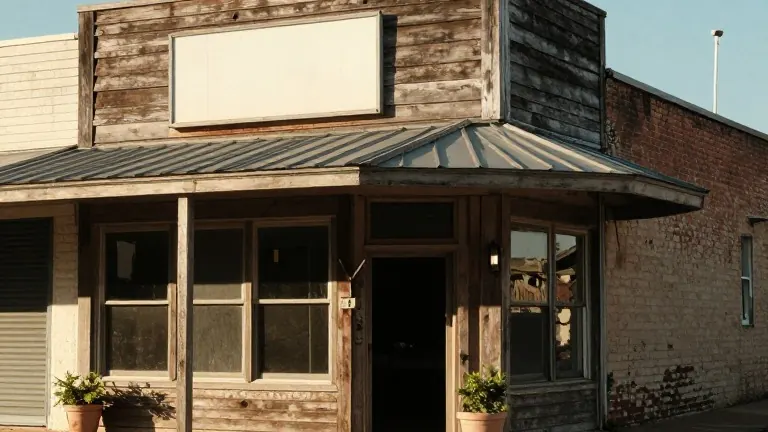
The building at 2809 South First St. has hosted distinct culinary eras. From 1965 to 1993, it housed Virginia's Cafe. From 2008 to 2019, it served as the first brick-and-mortar location for Torchy's Tacos. The frame building also contained ForRay's, an espresso bar; El Nopalito, a cactus-infused Mexican cafe; Acuarios, a Tex-Mex restaurant; and Show Me, a high-tech pizza parlor.
Virginia Doherty, the owner of Virginia's Cafe, limited seating to four tables and six barstools. She was known for a meat-plus-three menu and a cantankerous demeanor. Torchy's Tacos pursued a growth-driven model and expanded into a 140-eatery chain. A 2016 visit by President Barack Obama visited the Torchy's location. Virginia Doherty died in 2007.
Late Statesman reporter Michael Corcoran noted that newcomers to Austin often lack the nostalgia for the previous tenants of South First Street. He observed that drivers can pass the location without pining for the past. The building continues to serve the community, having cycled through five major food concepts over the last six decades.
More Business · Consumer Watch · Report a business · Got a Story?