Filipinos flock to Manila cemeteries to honor deceased relatives
Lorita Santos and thousands of others visited graves on Sunday, a tradition that blends pre-colonial ancestor veneration with Catholic observance.
By Adriana Abebe ·
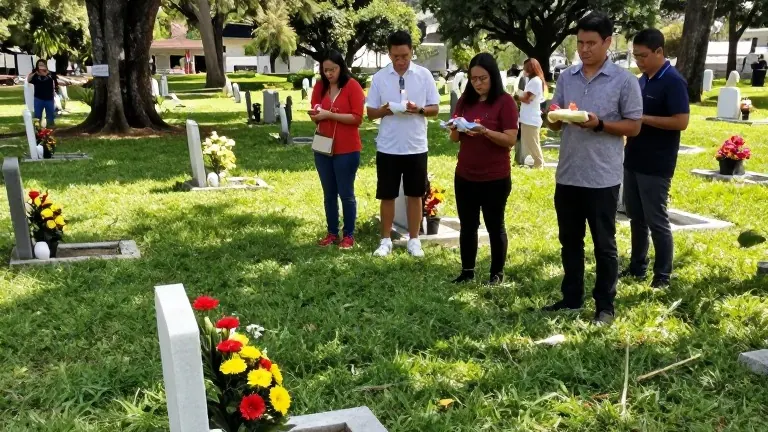
Lorita Santos stood at the graveside of her father on Sunday, keeping the memories of their time together close to her heart.
She was part of a large crowd gathering in Manila cemeteries to mark All Saints' Day, a local observance known as Undas.
The tradition dates back to the Spanish word for honors. For generations, families have used this time to remember their dead.
Santos and her family brought flowers and candles to the resting places of her father and three other relatives. They also shared snacks and prayers.
The visits allow families to tell stories about those who have passed away. Santos recalled how her father gave small gifts to his children and grandchildren every payday.
Santos said she is teaching her own children these rituals so they understand the tradition if something happens to the family in the future.
The practice combines Catholic observances with older local beliefs. Nestor Castro, an anthropology lecturer at the University of the Philippines Diliman, noted that ancestor veneration existed long before the Spanish arrived in 1565.
Before colonization, Filipinos offered food to ancestral spirits known as anito. The arrival of Catholicism and trade routes with Mexico shaped the modern holiday.
Mexico also observes similar customs, including setting up altars with marigolds and music. Families in Bolivia, Poland, and Hungary share these traditions of gathering for flowers and prayers.
Castro explained that death in Filipino culture serves as a binding event for families. Funerals often wait for distant relatives to arrive before burial, creating reunions.
During Undas, families often share sticky rice cakes. The texture symbolizes the strong bonds between relatives.
Mike Mamaril, a 42-year-old school maintenance employee, visits his parents' graves annually. He learned the custom from his grandparents and makes time for the trip despite a busy schedule. He and his family use the visit to recall lighter childhood moments, such as who among the siblings was scolded the most.