Podiatrists say runner’s toe is preventable with proper shoe fit and care
Doctors outline how to treat subungual hematomas at home and identify the specific footwear errors that cause repetitive trauma to toenails.
By Kofi Costa ·
Runners who have lost toenails to repetitive impact can treat the injury at home without professional intervention, according to foot and ankle specialists. The condition, medically known as a subungual hematoma, involves bleeding under the nail bed that turns the nail purple or black. While common among marathoners, the issue stems from mechanical friction rather than a specific athletic event, and it affects anyone wearing poorly fitted shoes.
Dr. Jacob Wynes, a podiatric surgeon at the University of Maryland School of Medicine, notes that the injury results from blood vessels rupturing in the nail bed. This happens when toes repeatedly strike the top or front of a shoe. The trauma forces blood to collect under the nail plate, leading to discoloration and potential nail loss. While runners are a high-risk group, soccer players, skiers, and hikers also suffer from the same mechanical failure.
The primary driver of the injury is improper footwear, says Dr. Rull James Toussaint, chief of the foot and ankle division at the University of Florida College of Medicine. Shoes that are slightly too small, narrow, or wide create excessive pressure over time. Running downhill or logging high mileage increases the frequency of these impacts. Heat and moisture buildup inside the shoe further degrade the fit, allowing the foot to slide and jam against the toe box.
Treatment depends on the integrity of the remaining nail. If the nail is intact and not loose, it will typically grow out on its own, according to Toussaint. In this stage, the focus shifts to preventing further damage rather than active medical intervention. However, if the nail detaches partially or fully, the exposed nail bed requires protection to prevent infection. Dr. Kristin Hullings, an assistant professor at Temple University, advises keeping the area clean with mild soap or saline solution.
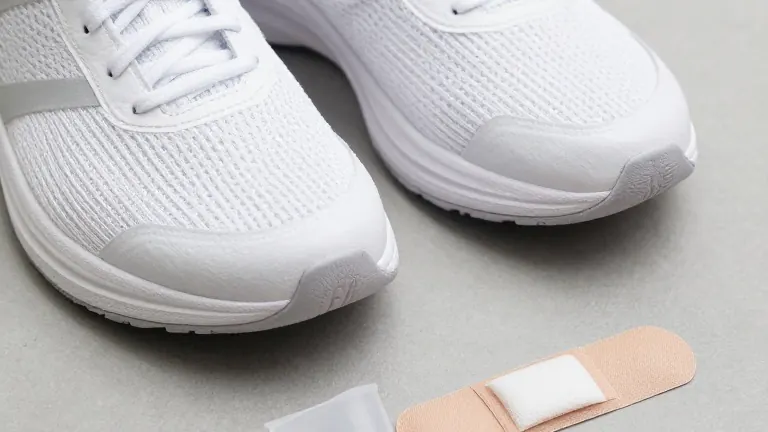
For detached nails, practitioners recommend trimming loose edges to prevent snagging while leaving the attached portion in place to act as a splint. A topical antibiotic ointment should be applied to the exposed bed to maintain moisture and fight germs. A non-adherent bandage should cover the area and be changed daily. Hydrocolloid bandages are discouraged because their sticky surface can fuse to healing tissue.
Prevention centers on correcting the root cause of the friction. Professionals suggest having feet measured at a running store to determine the correct size, width, and toe box volume. Wynes recommends measuring feet at night when they are most swollen. There should be at least one thumb’s width of space between the longest toe and the shoe’s top. This buffer prevents the direct impact that ruptures blood vessels.
Material choice also plays a role in reducing risk. Breathable, moisture-wicking socks help prevent the damp, hot environment that encourages foot slippage inside the shoe. Some runners use silicone sleeves or toesocks to separate digits and reduce skin-on-skin friction. These accessories create a barrier against the shoe’s interior, distributing pressure more evenly across the foot.
When a subungual hematoma is caused by sudden trauma, such as dropping an object on the toe, medical evaluation is required to rule out fractures. In cases of gradual, repetitive injury, home care is sufficient for most patients. The goal is to restore the nail bed’s function while eliminating the mechanical error that caused the initial bleeding.