6 Billion Dollars in Withheld Taxes Force West Bank Schools to Close Two Days a Week
The Palestinian Authority cut class schedules to three days as unpaid salaries hit 40,000 educators.
By Adriana Abebe ·
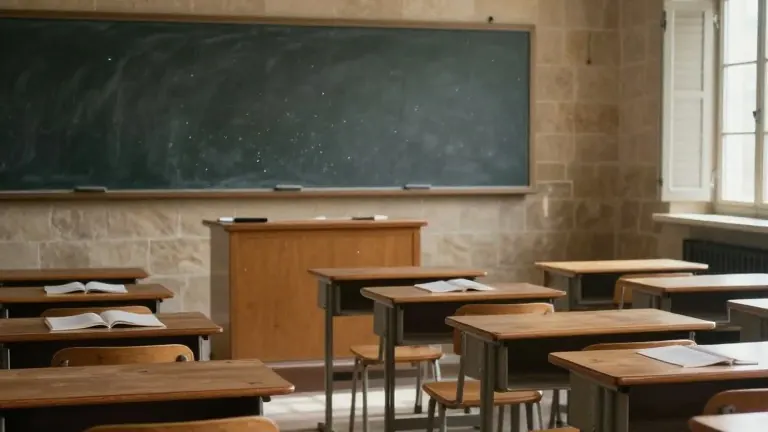
Students in the West Bank now attend public schools only three days per week. The Palestinian Authority implemented this reduction for the fourth consecutive year. The schedule change responds to a severe financial crisis that has strained the local government’s ability to pay staff.
Mahdi Daraghmeh in al-Malih sends his three children to elementary school on these limited days. The building remains closed the rest of the week. Daraghmeh said his children often play smartphone games on off days, which he believes causes them to forget what they learned.
This part-time model affects hundreds of thousands of students in government-run facilities. The financial strain has also impacted educators. Many teachers have received only 50 percent of their regular salaries for the past three years. A principal who requested anonymity said academic performance has declined. He called the three-day limit a dangerous sign for the region’s education system.
Israel’s withholding of tax revenues has driven the budget shortfall. These funds previously averaged 700 million shekels per month and accounted for 60 percent of the PA budget. President Mahmoud Abbas announced in September 2026 that the amount held by Israel reached 6 billion dollars. To manage the gap, the PA delayed payments and reduced salaries for more than 40,000 public sector employees.
The Finance Ministry announced in September that public workers would receive pay for June at 50 percent of their normal salary or 2,000 shekels, whichever was higher. Teachers struck over these partial payments in early 2023. The PA later directed public employees to work two days a week, which led to the current three-day school schedule.
Recent data shows the impact of these changes. OECD figures released in September 2025 indicate that math and science proficiency among Palestinian 15-year-olds fell since 2022. Reading scores remained stable. About 9,000 students took the tests. Palestinian scores fell well below the OECD average, placing them among the lowest globally.
The Association for Civil Rights in Israel reported that school hours are often shortened even on open days. Time dedicated to Arabic language curriculum has been reduced by nearly two-thirds. Matriculation passing rates remained stable in 2023 and 2024, but the PA has not yet published figures for the last two years. The gap between public and private education has widened. Private schools in Ramallah charge around 10,000 shekels per child annually and remain open full weeks.
Movement restrictions have further complicated access. New checkpoints since October 2023 make it difficult for students and teachers to reach classrooms. In Hebron’s Jabari neighborhood, attendance at government schools dropped by 25 percent since the start of the war. Saad Erekat, chairman of the Palestinian Teachers’ Union, said a return to a full week is linked to the restoration of full salaries. Teachers are seeking a deal with the PA, which has rejected proposals to prioritize teacher compensation.