Trump: Military phase of Iran war 'has ended in practice'
The president told reporters on Monday that the United States is maintaining the status quo while seeking a long-term solution for Tehran's nuclear program.
By Adriana Abebe ·
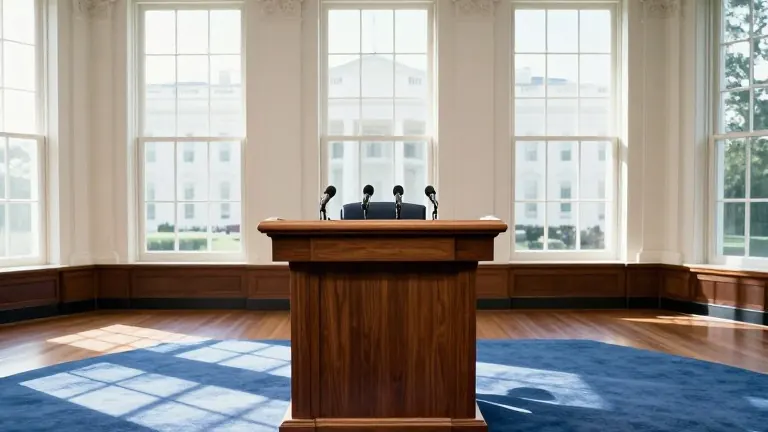
President Donald Trump stated on Monday that the military conflict with Iran has effectively concluded. Speaking to reporters in the White House press briefing room, the president said the war is over from a military standpoint. He indicated that the administration is currently maintaining the status quo rather than resuming bombing campaigns.
Trump made the remarks during a surprise visit to the press room. He had just finished a meeting with Qatari Prime Minister Sheikh Mohammed bin Abdulrahman bin Jassim Al Thani. The president described Iran as having been decapitated militarily. He said the United States is now working to secure a long-term solution to neutralize the Iranian nuclear program.
The comments come after the Republican Party lost control of both chambers of Congress in the midterm elections held the previous week. Voter dissatisfaction with the war was a major factor in the election results. The conflict, which began eight months ago with a joint campaign by the United States and Israel, has driven up fuel prices and affected global economic sectors.
Trump has previously threatened to order intensified attacks if Iranian leaders did not accept American terms. He has also issued last-minute statements allowing more time for diplomacy. In a social media post before speaking with reporters, the president noted that U.S. allies in the Middle East prefer the current status quo. Those allies include Qatar, Saudi Arabia, the United Arab Emirates, Bahrain, and Kuwait.
The White House declined to comment on indirect conversations with Tehran that Trump referenced last week. Two Middle Eastern government officials familiar with the matter said Qatari officials presented proposals regarding Iran's nuclear program earlier in the week. Trump said Iran is negotiating politely and that there is a good possibility the war could end.
The United States is maintaining a naval blockade against Iran. Trump called it the largest military blockade in history. Thousands of U.S. soldiers remain positioned in waters off Iran to stop the flow of Iranian oil to world markets. The president did not indicate that these troops would be withdrawn.
Defense Secretary Pete Hegseth said the next steps depend on Trump. He suggested the U.S. could tell Iran that the war is over and that it will monitor nuclear material. Hegseth has faced criticism for the war, with opponents arguing the administration launched it without proper authorization. Representative Thomas Massie, a Republican, initiated a process on Monday to force a vote to impeach Hegseth over his handling of the conflict.
U.S. forces conducted limited attacks on Iranian air defenses at least twice in the past week. On Saturday, the military fired on a commercial ship and left it disabled. The United States stated the vessel was attempting to break the blockade of Iranian ports. Trump said the U.S. has identified infrastructure targets, including 38 bridges, that would be attacked if military actions resume.