Arab-led parties win 19 seats in Israel's stalled election
Record turnout by Palestinian citizens of Israel leaves both major blocs short of a governing majority, triggering complex coalition talks.
By Kofi Costa ·
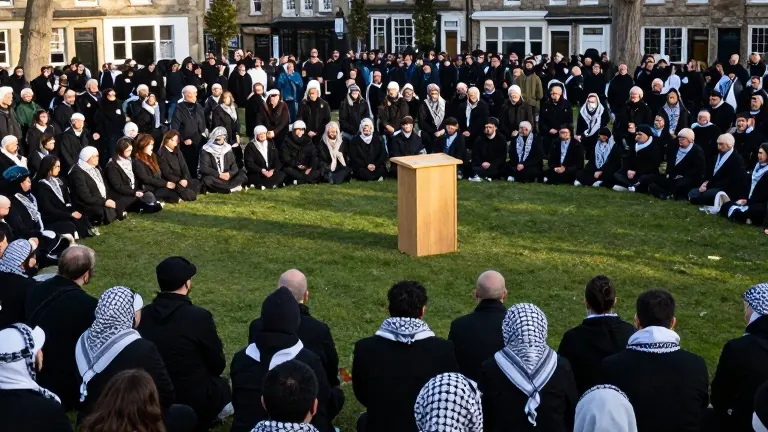
Palestinian Arab voters in Israel cast ballots in record numbers last month, handing Arab-led parties 19 of 120 Knesset seats. This result stripped Prime Minister Benjamin Netanyahu’s coalition of its majority while preventing challenger Gadi Eisenkot from reaching the 61-seat threshold required to form a government.
Jamal Zahalka, chairman of the High Follow-Up Committee, described the outcome as a historical achievement that blocked the continuation of Netanyahu’s far-right government. He noted that the community found its strength through participation. The Central Elections Committee reported a 64% increase in votes for Arab-led parties compared to the previous election.
The election results have intensified debate over the role of Palestinian Arabs in Israeli society. In Kufr Qasim, hundreds gathered two days after the vote to commemorate the 1956 killings of local residents by border police. Speakers told the crowd that the story is not over, referencing current discrimination and the ongoing war in Gaza. Intisar Sarsur, 65, said her family sought basic human rights, noting that everyone in her circle participated in the election.
Netanyahu’s Likud party responded by claiming the Arab parties stole the election through bribery and forgery, warnings of an Islamization of Israel followed. The party has not released evidence for these claims. Police found no basis for the allegations, and election officials stated the vote was conducted properly. Itamar Ben Gvir, the national security minister, urged voters in Kufr Qasim to ensure the country remains Jewish and Zionist.
Coalition negotiations are complicated by the political positioning of the contenders. Eisenkot, a former military chief of staff, is viewed as a hawk who formulated the Dahiyeh doctrine in 2008. Arab parties are divided on how to proceed. Ra’am, a socially conservative Islamist party, campaigned for a governing role. The Joint List alliance, which won 11 of the 19 Arab-led seats, stated it will not formally partner with Eisenkot due to the war in Gaza and the occupation of the West Bank, though it could back his government from outside.
President Isaac Herzog is consulting with parties to determine who receives the mandate to form a coalition. He is expected to announce his choice next week. The selected candidate will have 28 days to build a government, with the option of a two-week extension. If that fails, a second candidate gets 28 days without extension. If no coalition forms, repeat elections are scheduled for next year.
Mansour Shaaban, 33, said he voted for the first time to stop what he called racism and oppression. He noted that while many Israelis live alongside Palestinians, current leaders are making co-existence difficult. He believes right-wing politicians now know that Palestinian citizens have found their voice.