Attorney questions Learjet 60 route near Florida storms
Mike Slack argues a Jacksonville path would have avoided the weather with minimal delay, while the NTSB prepares to access the crash site.
By Kofi Costa ·
Mike Slack, an aviation attorney and pilot, says the Learjet 60 that crashed in South Florida on Sunday flew dangerously close to a severe thunderstorm system before losing control. Slack, who previously worked at NASA's Johnson Space Center and holds a degree from Texas A&M University, told the Houston Chronicle on Tuesday that the aircraft entered the fringe of a very developed storm. He stated that the plane was in dangerous proximity to convective weather during its final moments.
Slack questioned why the pilots selected a route through Miami when an alternative path via Jacksonville would have added only minutes to the flight. He noted that the Jacksonville route faced absolutely no weather, whereas the chosen path put the crew near active storms. Slack asked why the pilots put themselves in that situation when a northern route to North Eleuthera offered no weather risk.
The National Transportation Safety Board is investigating the incident and has not yet determined a cause. NTSB officials identified weather as a major focus of the probe. The operator, Upper Jets, did not respond to emails or voicemails left by the Chronicle. Slack noted that radio communications showed the crew reporting light icing and moderate turbulence. The outside temperature at the time was minus 47 degrees Celsius.
Slack explained that modern safety standards typically keep aircraft at least 30 miles from intense thunderstorm edges. He warned that ice buildup or powerful updrafts could have triggered an abrupt stall. He described the Learjet 60 as having a reputation for being unforgiving during stalls. Slack said that once the aircraft loses lift, recovery is extremely difficult, a trait that has earned the model the nickname widow maker.
He argued that the loss of lift in a Learjet 60 is like flipping a switch. Slack claimed that even an astronaut would struggle to recover the plane once it stalls. He emphasized that pilots need specific experience managing the aircraft's tendency to behave unpredictably in certain conditions. He stated that the prelude to the crash outcome remains an unknown factor in the investigation.
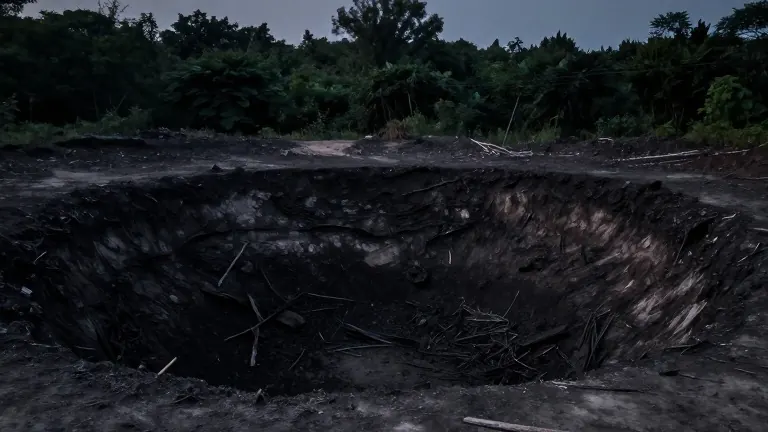
The NTSB expects to access the crater on Wednesday. Officials said the amount of recoverable evidence could be minimal. Slack predicted that debris and hazardous materials, including fuel and oil, may have spread about a half mile in all directions. He warned that screening the area for hazards could take three to four weeks to complete properly.