Democrats Lead House Polls by Wide Margins as Election Night Approaches
Surveys show a path to reclaiming the lower chamber, but recent primary upsets and historical polling errors introduce uncertainty into the November 3 contest.
By Adriana Abebe ·
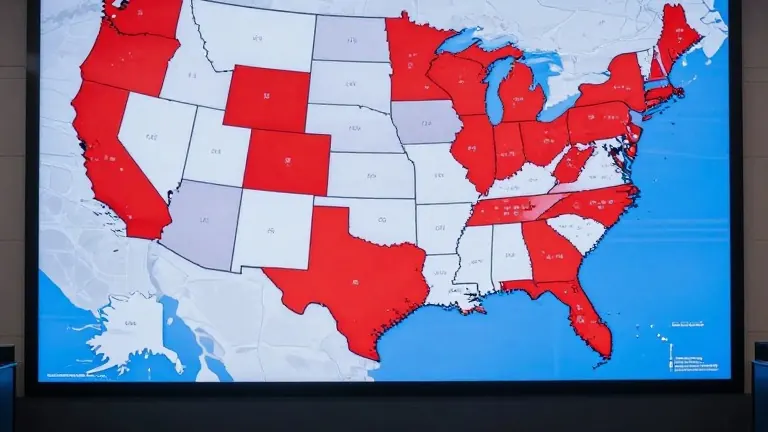
Democratic candidates currently lead in more than 218 House of Representatives districts, a threshold sufficient to seize control of the lower chamber from Republicans. This numerical advantage appears in current polling data as the general election date, November 3, draws near. The polls also indicate that Democrats are tied or hold narrow leads in several critical Senate contests.
The optimistic outlook for the opposition party is driven by specific state-level results. A New York Times survey shows a tie in the South Carolina Senate race, a state where Donald Trump secured an 18 percentage point victory in 2024. CNN surveys place Democratic candidates ahead in Texas, Kansas, and Maine. These leads occur against a backdrop of a Republican president with low approval ratings and voter dissatisfaction regarding the rising costs of food and utility bills.
Despite the current numbers, political analysts point to a history of inaccurate polling that complicates the forecast. In the 2016 and 2024 presidential elections, Trump outperformed survey projections. Conversely, his 2020 defeat was narrower than many models predicted for his opponent, Joe Biden. Recent primary races this year also demonstrated significant deviations from earlier estimates.
In Michigan, polls suggested Democrat Abdul El-Sayed would win his Senate primary by double digits, yet he won by only one percentage point. A similar pattern emerged in Wisconsin, where a Democratic gubernatorial candidate with a polling lead of nearly 20 points lost by a fraction of a percent. These discrepancies have raised questions about the reliability of current data for the general election.
Clifford Young, president of Ipsos Public Affairs, attributes these errors to shifting voter behavior and technological changes. Americans are abandoning landlines and screening calls, making it harder for pollsters to reach a representative sample. Young notes that conservative voters, particularly those on the far right, often view polling as part of an establishment system they oppose, leading to lower participation rates in surveys.
If Republican voters are systematically undercounted, polling models may skew toward Democratic outcomes. This risk is compounded by the polarization of the electorate, which has reduced the number of swing voters. Experts describe the current voting population as calcified, meaning fewer voters change their minds late in the campaign. Additionally, redistricting has resulted in fewer House seats switching parties between cycles.
Republicans also hold a financial advantage in this cycle. They have spent hundreds of millions of dollars on attack ads in the final weeks of the campaign. In 2022, midterm polls accurately predicted that Democrats would avoid a total wipeout despite low presidential approval ratings, allowing them to retain Senate control while losing the House. That accuracy was partly because Trump, who can draw disaffected voters to the polls, was not on the ballot.
The upcoming election features many close races where small polling errors can determine the winner. While primary results showed larger surprises, Young argues that nominating contests are historically more volatile than general elections. Voters often make final decisions at the last minute in primaries, which does not necessarily indicate that current general election polls are flawed.
The next scheduled event is the general election on November 3. Voters will head to the polls to decide the control of the House and the outcome of key Senate seats. Campaigns have entered their final phase, with rallies and late-stage advertising designed to influence undecided voters in tight contests.
More Business · Consumer Watch · Report a business · Got a Story?