
New Telescope Spots Potential Giant Dwarf Planet Beyond Pluto
Astronomers identified a large object 4.3 billion miles from the sun using the Vera C. Rubin Observatory.
By Kofi Costa ·
The solar system extends far beyond the familiar planets, a region where new worlds remain hidden in the dark. On October 27, scientists announced the discovery of a large object in that distant neighborhood.
Researchers named the candidate 2026 ED138. They estimate its diameter ranges between 370 and 930 miles. If those measurements hold, it would rank among the largest dwarf planets found in that area of space. The object sits 4.3 billion miles from the sun, a distance that places it well past Pluto, which averages 3.7 billion miles from our star.
Astronomer Matthew Holman identified the object on October 13. He used software he developed with colleague Kevin Napier to analyze data collected earlier in the year. The observatory noted that the object's brightness and distance signaled an unusual size. Holman described his reaction as one of excited disbelief. He said, Objects like this are very rare, so I immediately started checking whether I or the code had done something wrong.
The discovery came from the Vera C. Rubin Observatory in Chile. The facility began a ten year sky survey in June 2026. It uses the world's largest digital camera to scan for unseen objects. The project is jointly funded by the U.S. National Science Foundation and the Department of Energy's Office of Science. The observatory's continuous monitoring of the Southern Hemisphere sky allowed the team to detect ED138 in a crowded field.
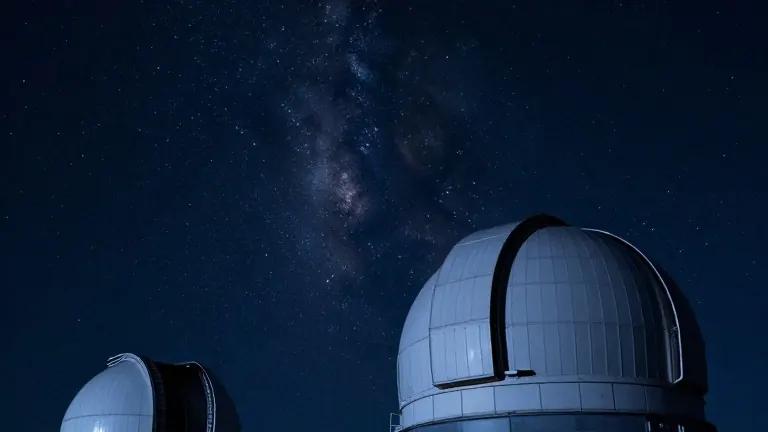
Earlier telescopes missed the object because it hides near the Milky Way. Millions of stars in that region create a dense background that obscures faint, moving bodies. The Rubin Observatory's algorithms sift through billions of points of light to isolate small moving objects. This capability enabled the team to spot ED138 despite the visual clutter.
Scientists classify ED138 as a trans-Neptunian object because it orbits the sun beyond Neptune. The team plans further observations to determine its exact size. They also need to confirm if it meets the criteria for a dwarf planet. Holman noted that if confirmed, ED138 would join a small family of worlds. He added that the Rubin telescope will image the whole southern sky repeatedly for ten years, bringing other hidden objects within reach.
A dwarf planet orbits the sun and is massive enough to assume a nearly round shape. It does not, however, clear its orbital path of other debris. Pluto held the status of the ninth planet from its discovery in 1930 until scientists reclassified it as a dwarf planet in 2006. This new candidate joins other recent findings that expand the known boundaries of our solar system.