Amazon Builds Second-Generation Home Robot After Astro Fails to Gain Traction
The company assembled a new team and acquired Fauna Robotics to create a successor to its original, low-selling household robot.
By Kofi Costa ·
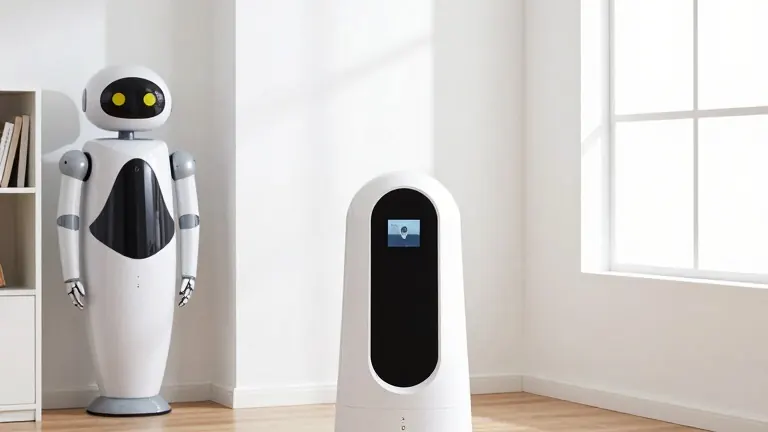
Amazon is assembling a new engineering team to build a home robot from scratch, abandoning the specific hardware of its first attempt while keeping the core objective. The move comes after the original Astro device, launched in 2021, failed to expand beyond an invite-only beta and shipped to only a few thousand customers. The new product, described in job postings as a "new-to-world robot product," aims to move autonomous technology from controlled labs into living rooms.
The company’s previous robot, the $1,450 Astro, functioned primarily as a security camera and remote monitor. It could navigate floors and recognize faces but lacked physical arms to interact with objects. Many early adopters now view the device as a niche gadget rather than a household essential. One owner in North Carolina, Emily Lugo Velez, described the robot as a "trip hazard" that she sends back to its charging dock most days.
To build its successor, Amazon acquired Fauna Robotics in March. Fauna, based in New York, developed a 3.5-foot-tall humanoid named Sprout. The acquisition created a new division called the Personal Robotics Group. This group includes staff from Amazon’s Lab126 unit, the team behind the Kindle and Echo speakers. The company also hired an MIT roboticist to lead the home robot project, according to LinkedIn profiles.
CEO Andy Jassy identified artificial intelligence and robotics as major inflection points for the industry. In his annual letter to investors, he wrote that the company invents for the next major shift in customer needs. Analysts agree that the market is growing. Barclays forecasts the global humanoid market will reach $40 billion by 2035, up from an estimated $2 billion to $3 billion today. Under optimistic scenarios, that figure could reach $200 billion.
The new robot aims to solve the specific problems that plagued Astro. Job listings describe a device capable of operating alongside family members in "dynamic home environments." The company is hiring engineers and designers to define the user experience of living with a Fauna robot. One listing states the goal is to make robots "people actually want to live and interact with in everyday human spaces."
Challenges remain for home automation. Jeff Burnstein, president of the Association for Advancing Automation, noted that homes contain unpredictable obstacles like pets, children, and stairways. No two houses are identical, which complicates navigation for walking robots. The industry is seeing a surge in funding, with venture capital firms investing $33.4 billion in robotics and physical AI in the first half of this year. That amount exceeds the $28.7 billion invested in all of 2025.
Amazon’s history in robotics includes the $775 million acquisition of Kiva Systems in 2012. That deal introduced mobile robots to its fulfillment centers, leading to a fleet of over one million warehouse robots today. The company attempted to buy iRobot in 2022 but withdrew from the deal in 2024 due to regulatory concerns. Former iRobot CEO Colin Angle said the tools for building robots have improved dramatically since Astro was developed, calling the previous toolkit "incredibly primitive."