
UT San Antonio receives $1M NASA grant to simulate lunar ice handling
Researchers will build a custom facility to test how frozen moon soil responds to excavation, aiming to support water extraction for future Artemis missions.
By Kofi Costa ·
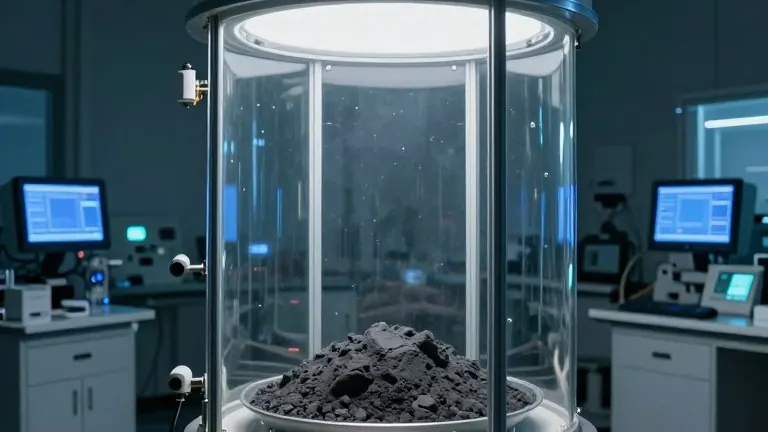
NASA has awarded UT San Antonio $1 million to study the physical properties of icy lunar soil. The two-year project, which begins this month, focuses on regolith found in the Moon's permanently shadowed polar craters. Understanding how this material behaves in extreme cold is necessary for future missions that plan to extract water on the Moon rather than transporting supplies from Earth.
The grant comes from the NASA MUREP Space Technology Artemis Research program. This initiative supports research and workforce development at minority-serving institutions. NASA selected only 12 institutions nationwide for the award. The project title is Characterizing Physical and Mechanical Properties of Regolith at Cryogenic Conditions using the Multi-Planetary Surface Simulator.
Kaushik Mitra, an assistant professor of Earth and Planetary Sciences and the principal investigator, said the work addresses a fundamental challenge for the Artemis era. He stated that establishing how water ice interacts with lunar soil under cryogenic conditions is essential for building scalable resource utilization systems. The team will generate physical and electrochemical data that NASA and industry partners need to extract surface resources.
Researchers will use a new facility called the Multi-Planetary Surface Simulator, or MPS2. Housed in the Laboratory for Experimental and Aqueous Planetology, the MPS2 controls temperature, pressure, atmospheric composition, humidity, and radiation. This setup allows scientists to replicate environmental conditions on the Moon and other planetary bodies. The team will examine how daily temperature cycling affects the soil's cohesion, flow behavior, and mechanical properties.
Alan Whittington, a professor of Earth and Planetary Sciences, noted that the Artemis mission aims to establish a base at the lunar South Pole. He explained that water ice mixed with lunar soil may be difficult to dig up. His HAMSTER lab will study how the hardness and scoopability of the regolith changes with different amounts of water ice. The project involves four UT San Antonio laboratories with complementary expertise in planetary simulation, rheology, mechanical properties, and electrochemistry.
The grant also funds student training. Each summer, three UT San Antonio students will receive 10 weeks of paid research experience at the Jet Propulsion Laboratory, the Johnson Space Center, or the Goddard Space Flight Center. Matt Cannon, an associate professor of instruction, will help select these students in November and December for internships starting in Spring 2027. On campus, the project supports four undergraduate researchers per semester, one master's student, and a postdoctoral researcher.
The project also includes paid summer research positions for four students from local community colleges and two high school students from the Southwest Independent School District. Co-investigators from the Southwest Research Institute will collaborate with the UT San Antonio team. The facility allows for the development of custom instruments designed to survive the extreme conditions of the Moon.