
HIV Prevention: New Drug Shortage Hits Uganda
A generic version of lenacapavir was approved in the U.S. on Monday, but local clinics in Mbarara are already running out of doses.
By Adriana Abebe ·
In the red light district of Mbarara, a city in western Uganda, sex worker Lisa Mutoni uses condoms to protect herself from HIV. The barrier is physical, but it is often contested. Some clients try to remove or tear the condom during sex. Mutoni also takes preexposure prophylaxis, or PrEP, in pill form. A new option exists that could reduce this friction, but she cannot find it.
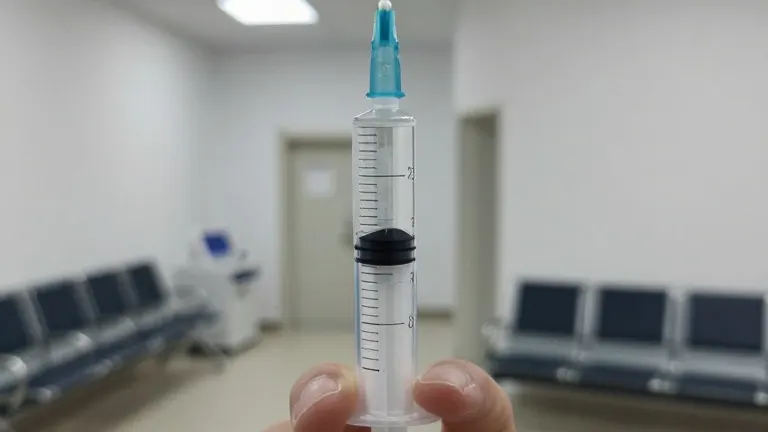
The drug is called lenacapavir. It is an injection that provides protection for six months after a single dose. Studies show it offers nearly complete protection from HIV. For people who travel for work or forget daily pills, this long duration is a major advantage. Mutoni said the injection provides peace of mind. “If you know that you have that injection for six months, you feel like you are safe,” she said.
Despite its effectiveness, the drug is scarce. Mutoni says clinics tell her the supply is finished every time she visits. “They tell me that it is finished,” she said. The drug was developed by Gilead Sciences. Other PrEP options, such as daily pills or an every-other-month injection of cabotegravir, are widely available. Health experts believe lenacapavir could help turn the tide of the epidemic globally because of its long-lasting effects. However, the current supply does not match the demand.
Andrew Hill, a senior visiting research fellow at the University of Liverpool, said the rollout is too slow. “The rate of growth (of lenacapavir rollout) isn’t fast enough. We need to be getting to the millions pretty soon,” he said. A change may be on the horizon. The U.S. Food and Drug Administration tentatively approved a generic version of lenacapavir on Monday. This approval is expected to speed up production and distribution to 120 low-income countries.
The generic version will cost roughly $40 per year. This is far below the U.S. list price of $28,218. The Global Fund hopes to provide the drug to 3 million people by the end of 2028. Some organizations argue this target is too low. Doctors Without Borders, known as MSF, is calling on Gilead to make cheap doses available to more countries. The group also wants Gilead to sell the drug directly to MSF so it can reach more people faster.
Melissa Barber, an MSF USA global health advocacy and policy adviser, criticized the current approach. “Gilead says it wants to end the HIV epidemic ‘for everyone, everywhere,’ but its actions say otherwise,” she said in a recent statement. In Mbarara, an estimated 10% of the adult population has HIV. This is double the national rate for Uganda. Residents in the city often have to settle for less effective prevention methods.
Julius Bampe, a builder, learned his younger wife had HIV earlier this year. She was immediately given drugs to suppress her infection. Bampe sought lenacapavir for himself but found no doses left at his clinic. “When I got here, they said that is what they would have given me, but they said they didn’t have enough doses for everyone,” he said. The facility initially received 40 doses in April, with instructions to prioritize pregnant mothers at risk. Guidelines were later expanded to include couples, sex workers, and others.
The initial batch was administered quickly. Another 70 doses arrived in June and were used up within 10 days, according to Tarsisio Biryeija, a nursing officer at Mbarara Health Centre IV. Uganda has reduced its HIV rate over the past three decades. Health authorities say infections are driven largely by transactional sexual encounters. These are the types of transmission that lenacapavir is designed to stop.
Immaculate Nyamwija, founder of Action for Improved Health and Wealth, supports women in Mbarara who face discrimination. She provides counseling and condoms to clients like Mutoni. She noted the difficulty of the current supply situation. “It is a challenge, because the demand is high and the doses are few,” Nyamwija said. “Who would not wish to take (lenacapavir) for six months? Who would wish to be on drugs every day?”