Norwegian Air Force Deploys NASAMS Sensors in Kirkenes
More than thirty soldiers will operate the new drone detection system in Sør-Varanger by year-end.
By Adriana Abebe ·
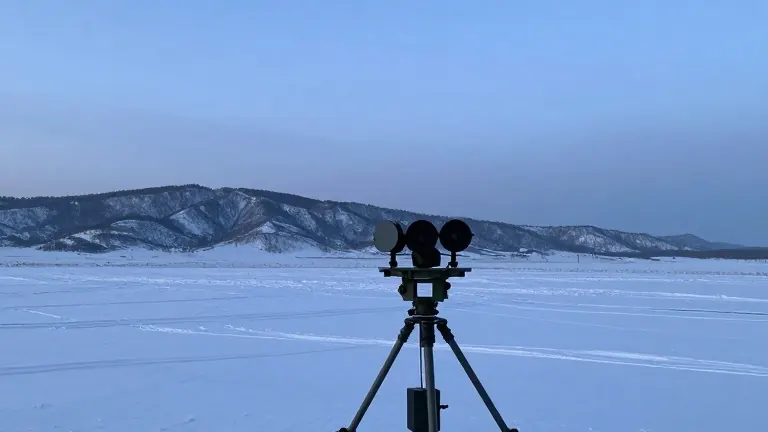
Norwegian military authorities are installing specialized NASAMS sensors in Kirkenes to monitor drone activity near the Russian border. The system is designed to identify aircraft that deviate from intended flight paths early in their trajectory. This deployment aims to improve security in the northern region by providing continuous aerial surveillance.
Defence Minister Tore O. Sandvik stated that Norway is preparing for the possibility of drones entering its airspace, a scenario observed in other nations. He clarified that the country does not currently perceive an increased threat to the population of Finnmark. The government described the measures as strictly preventive, intended to maintain readiness rather than respond to a specific immediate crisis.
The new technology will detect drones and issue warnings regarding their presence. It provides a comprehensive overview of all activity within the border airspace. This capability allows military personnel to maintain a clear picture of the air domain at all times. The system is engineered to track aerial movements in the sensitive zone surrounding the border.
A unit of over thirty military personnel will operate the new detection system. By the end of the year, this group will be stationed within the Ranger Battalion GSV in Sør-Varanger. This placement integrates the new detection capabilities directly into the existing regional military structure. The addition of these soldiers strengthens the local military presence in the area.
Minister Sandvik cited the experience of Ukraine as a lesson for Norway. He emphasized that early warning and a good overview are essential for defenders. The new sensors are expected to improve Norway's ability to detect drones in Finnmark. This enhancement supports better situational awareness for military units in the region.
The Norwegian Armed Forces are collaborating with the police on these efforts. The police retain responsibility for tracking and preventing illegal drone flights. This partnership ensures that civil and military authorities work together to manage airspace security. Both agencies will coordinate to handle potential drone incursions.
Recent regional events demonstrate the relevance of these defensive measures. On November 1, a Russian Geran drone entered Latvian airspace and remained there for seventeen minutes. In October, Russian attacks on Ukraine resulted in nineteen violations of Moldovan airspace by drones. These incidents illustrate the frequency of drone activity in the area that Norway is now monitoring.