Yemen Accuses Iran and Hezbollah of Placing 21 Military Experts with Houthis
Interior Minister Ibrahim Haidan details the specific locations and technical roles of the personnel, arguing that foreign involvement has shifted from financial aid to direct operational control.
By Marta Gray ·
Yemen’s internationally recognized government formally accused Iran’s Islamic Revolutionary Guard Corps and Lebanon’s Hezbollah of embedding 21 military specialists within Houthi ranks on Tuesday. Interior Minister Major-General Ibrahim Haidan stated that these individuals are no longer merely observers or trainers but are actively directing combat operations.
Haidan specified that 14 of the experts are members of the IRGC and seven are from Hezbollah. He noted that their presence marks a departure from previous patterns of financing, arming, and training. Instead, the government argues these foreign nationals are now responsible for direct supervision, planning, and the management of military capabilities on the ground.
The minister provided a precise breakdown of where the experts are stationed. Eight are located in Hodeidah, while four are in each of Sanaa and Saada. Two are in Hajjah, two are in Amran, and one is in the coastal city of Khokha. This distribution suggests a focus on both the capital region and the western coastal areas critical to maritime traffic.
The statement listed the technical specialities of the group as including command and control, ballistic missiles, and drone operations. Other roles involve electronic warfare, the smuggling of military components, and coordinating naval strikes. The experts are also tasked with selecting commercial ship targets, developing explosive-laden boats and autonomous submarines, and training fighters in mine-laying and siege tactics.
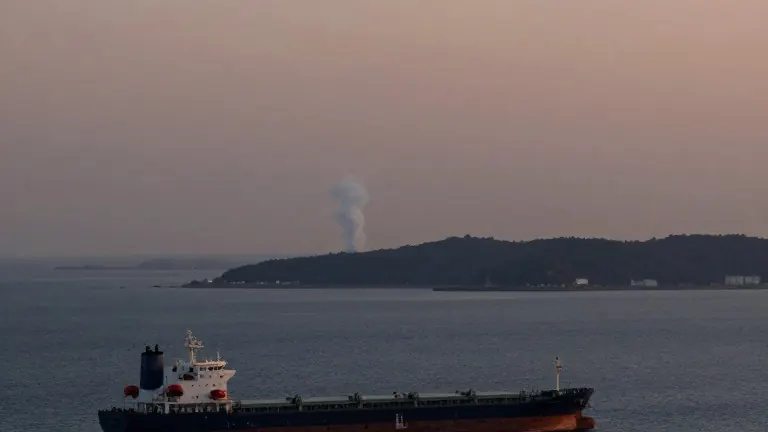
Haidan warned that these activities threaten shipping in the Bab al-Mandeb strait and the Red Sea. He further cautioned that the transfer of military expertise could eventually reach other armed groups. The minister called on the international community to designate the Houthis as a terrorist organization and to enforce the arms embargo under United Nations Security Council resolutions 2216 and 2624.
This accusation arrives as Yemeni armed forces and government-loyal fighters engage the Houthis in five provinces. The conflict reignited after the Houthis seized the western Red Sea coast and the Bab al-Mandeb area in September. That offensive shattered the relative quiet established by a 2022 ceasefire, which had followed a civil war that began in 2014 when the Houthis took the capital.
Saudi Arabia joined the conflict in 2015 at the head of an international coalition aimed at restoring the recognized government. Tehran has historically insisted the Houthis act independently, though the group acknowledges its alliance with Iran while denying it is a proxy. Hezbollah has previously rejected a role in Yemen’s war. Saudi Arabia, whose airports and oil facilities have faced recent Houthi attacks, has accused Iran of encouraging the current escalation.