Johnson's 'Chaos' Warning Collides With Democratic House Win
As Democrats secure a 250-157 House majority, Speaker Mike Johnson's pre-election warnings of DSA control and French-style unrest frame the immediate legislative challenge ahead.
By Kofi Costa ·
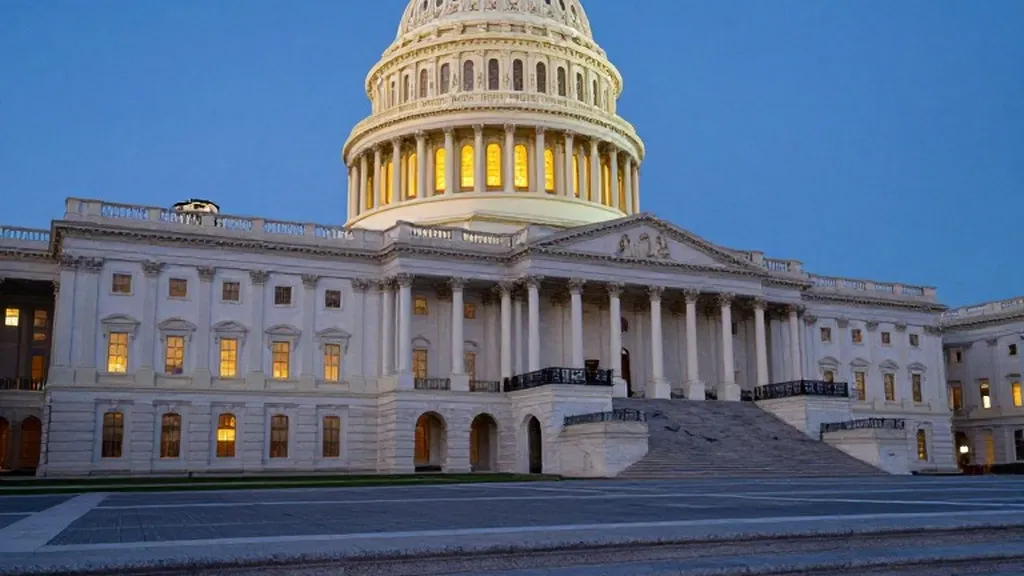
The 2026 midterm elections have concluded with a decisive shift in power, as Democrats have secured control of both chambers of Congress. Results indicate that Democrats will hold at least a 250-157 majority in the U.S. House, having picked up at least 43 seats from Republicans and independents. This outcome marks the realization of the very scenario House Speaker Mike Johnson warned voters about in his final campaign appearances.
In a USA Today op-ed published on October 30, 2026, Johnson argued that a Democratic House, even if narrow, would be held hostage by the Democratic Socialists of America. He stated that the party had bent the knee to its far-left wing, creating a dynamic where a small number of radical members could dictate the legislative agenda. This warning stood in stark contrast to the Republican claim that they had delivered historic results during the previous two years.
Johnson used the recent unrest in France as a cautionary tale for American voters. He described the violent riots in France as a dark harbinger of what could happen in the United States if Democrats took control. In his words, the crisis there was the inevitable result of decades of misguided policy choices, including lax border enforcement and suffocating regulation. He suggested that the chaos unfolding in France was a preview of the potential turmoil awaiting the nation under new Democratic leadership.
During his final week of campaigning, Johnson emphasized the stakes of the election in interviews on Fox News. On The Ingraham Angle, he predicted that if Democrats took control, it would be chaos every day for two years in the next Congress. He argued that the new leadership would be angrier than previous Democratic majorities, having taken a significant lurch to the left. He urged voters to remember that in 2024, ten House races were decided by 6,000 votes or less, making every single vote count in this high-stakes environment.
The Speaker also highlighted the influence of veteran strategist James Carville, who admitted that he would prefer Republicans keep the House rather than let Democrats win by a small margin. Johnson noted that Carville believed the party would be a hostage to the DSA. This endorsement of the radical left within the party structure was a central theme in Johnson's messaging, aiming to frame the election as a choice between common sense and absolute crazy.
In contrast to these warnings, the House Republican leadership highlighted a record of accomplishments that they argued justified their previous majority. According to a statement released for the Speaker's three-year anniversary, Republicans delivered $4.6 trillion in lower taxes, which they described as the largest middle- and working-class tax cut in history. They also claimed a $1.6 trillion reduction in wasteful government spending and the securing of the border, citing the passage of the One Big Beautiful Bill.
Johnson's op-ed detailed specific legislative wins, including the creation of the first-ever nationwide school choice program and the launch of Trump Accounts for children born between 2025 and 2028. He noted that these measures were achieved despite Democrats forcing three government shutdowns, including the longest in U.S. history. The Speaker emphasized that Republicans delivered these results with the slimmest House majority since the Great Depression, a point he used to argue for the effectiveness of his leadership.
The new Democratic majority now faces the task of governing with a significantly larger margin than the one Johnson led. With at least 250 seats, Democrats have a comfortable cushion to pass legislation, though the Senate remains more closely divided with a 54-44 majority. The immediate question for the new House leadership will be how to balance the expectations of the party's progressive wing with the need to govern effectively in the face of a Republican-controlled White House.
Johnson's pre-election rhetoric has set the tone for the coming two years, framing the new Congress as a group of angry Democrats seeking retribution. Whether the new leadership can deliver on the promises that resonated with voters, such as addressing high prices and government corruption, will determine if the chaos he warned of materializes. The stage is set for a fierce battle over the direction of the nation as the new terms begin in January.
The election results also saw significant gains for Democrats in state governments, with full control of at least six states that previously shared power with Republicans. This broader sweep suggests a national mood that was willing to punish the party of the president across multiple levels of government. For Johnson, the loss of the House ends a three-year tenure defined by legislative battles and a narrow path to passing major bills.
As the new Congress prepares to convene, the focus will turn to the specific policies that drove this wave. Voters cited the economy and the cost of living as crucial factors in their decision. The new Democratic majority will likely prioritize these issues, while the Republican minority, led by Johnson, will look to use their Senate presence to check the pace of legislative changes. The next two years will test the validity of the warnings issued in the final days of the campaign.