Middle East War Costs: Iran Targets U.S. Radar and Hangars
An AP analysis reveals that Iranian strikes destroyed billions in equipment, prompting a shift of assets out of the Persian Gulf.
By Marta Gray ·
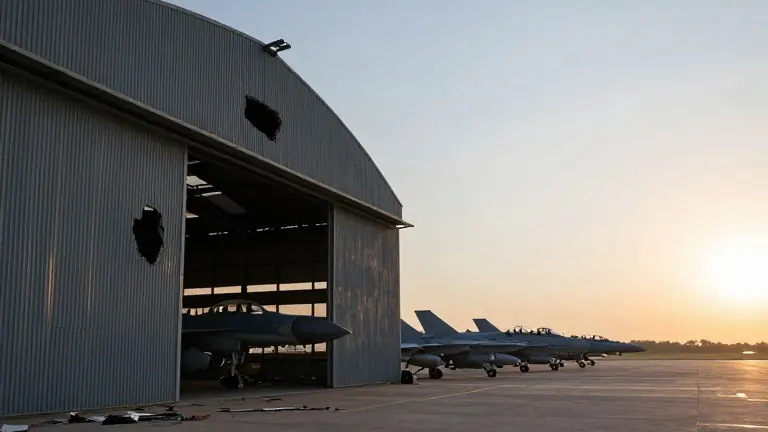
Iranian strikes on more than 26 U.S. military sites in the Middle East caused billions of dollars in equipment damage, with the initial focus on early warning systems to clear the way for attacks on aircraft and buildings. An Associated Press analysis using satellite imagery and official briefings found that over 115 drone or missile strikes claimed by Iran or its militias damaged or destroyed structures through August. The conflict, which began in late February, has reshaped the American military presence in the region.
Iran targeted the backbone of U.S. air defense by destroying enclosures for radar systems at Camp Arifjan in Kuwait and Naval Support Activity Bahrain within the first two days of the war. Strikes also hit portable radars at Prince Sultan Air Base in Saudi Arabia and Muwaffaq Salti Air Base in Jordan. N.R. Jenzen-Jones, director of Armament Research Services, stated that hitting key early-warning radars was intended to disrupt the U.S. and allies' ability to respond to further strikes.
Following the destruction of radar infrastructure, Iran launched more than 50 successful strikes on 18 locations in the first month of the war. These attacks prioritized areas with aircraft, damaging refueling planes, communication systems, fuel bunkers, and troop housing. A Congressional Research Service report updated in October confirmed that 15 U.S. aircraft were damaged on regional bases. Most of the attacks occurred in Kuwait, though sites in Bahrain, Iraq, Jordan, Oman, Qatar, Saudi Arabia, and the United Arab Emirates were also targeted.
Ali Al Salem Air Base in Kuwait was struck at least 30 times, resulting in the damage or destruction of at least 15 aircraft hangars and 10 buildings near a residential area. Camp Buehring in Kuwait faced heavy losses, with its gym destroyed in March and a troop store hit in late July. Two regional officials said the base's garage and dining room were also severely damaged. The deadliest known strike on U.S. troops occurred at Port Shuaiba in Kuwait on March 1, where a drone attack killed six soldiers.
Two regional officials said the U.S. has moved many assets out of the Persian Gulf, including aircraft, air defense systems, and communications equipment. Pentagon spokesman Sean Parnell stated that U.S. forces and bases are well protected and that service members in Central Command have everything they need. U.S. Central Command refused to specify the extent of damage, citing operational security.
Raphael Cohen, director of the National Security Program at the RAND School of Public Policy, noted that modern warfare makes all militaries susceptible to large-scale, cheap drone attacks. He said the current operating environment suggests that reliance on fixed infrastructure is no longer viable. President Donald Trump is considering new strikes after the midterm elections, while Tehran has vowed major retaliation.
The AP found that major satellite imagery providers blocked or delayed public release of images at the request of American officials until late August. This delay limited the ability to visually confirm strike damage for months. The conflict continues with no articulated endgame, leaving uncertainty about whether the United States will rebuild its bases and equipment in the region.