2026 Midterms: Record Spending and the $850 Million Trump Effect
Republicans lead in committee spending while Democrats hold an edge at the candidate level, with $850 million poured into deep red districts.
By Marta Gray ·

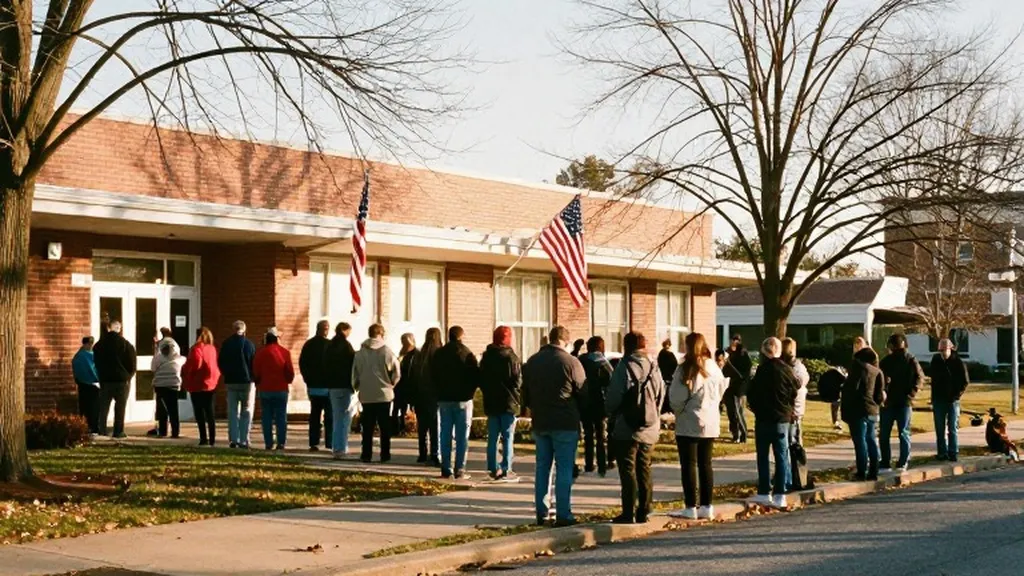
Election Day has arrived for the 2026 midterm elections, a contest that will determine the balance of power in Congress for the final two years of President Donald Trump's second term. With all 435 House seats and 35 Senate seats up for grabs, the stakes are high for both parties. The Associated Press describes the election as a referendum on the president's performance, particularly regarding economic conditions and the ongoing conflict with Iran. As polls open across the country, the focus is on what voters are doing and what is being decided, rather than on final results which are still to come.
The financial scale of this election is unprecedented. The 2026 cycle is likely to be the most expensive in history, with both parties pouring massive resources into their campaigns. According to an analysis of AdImpact data, Republican committees have outraised and outspent their Democratic counterparts. This advantage was bolstered by contributions from Trump-affiliated groups and Elon Musk. However, the picture is more complex at the individual level. While committees favored the GOP, Democratic candidates outraised their Republican opponents during the general election period.
A striking detail in the spending data reveals the geographic focus of Republican advertising dollars. The AP analysis found that 88.1 percent of Republican general election TV ad spending went to states and districts that Trump won in 2024. This strategic allocation included more than $850 million spent in districts where the president won by ten points or more. This suggests a defensive strategy aimed at protecting incumbents in safe Republican territory. In contrast, the spending patterns indicate that while committees had the advantage, the candidate-level race for funds was tighter, with Democrats managing to outspend their opponents in direct candidate appeals.
The mood among voters is shaped by economic anxieties. The Associated Press notes that voters are struggling with high prices and are angry over the unpopular war with Iran. An AP-NORC poll shows that 35 percent of U.S. Adults approve of Trump's job performance, while only 25 percent approve of his handling of the economy. About seven in ten respondents say the country is heading in the wrong direction, with most blaming the president for high prices. These figures provide context for the intense spending, as both parties attempt to sway voters who are feeling the pinch of inflation and economic uncertainty.
Turnout is a critical factor in this election. RNC Chairman Joe Gruters stated that everything depends on turnout, emphasizing that if Republicans turn out their voters, they will win. This sentiment reflects the party's strategy to maintain its majority in the House, where Democrats need a net gain of three districts to take control. Republicans can afford to lose no more than two seats. In the Senate, Democrats need a net gain of four seats to secure a majority, while Republicans can lose only two. The tight margins mean that every vote counts, and the heavy spending is a direct response to the need to mobilize the base and persuade undecided voters.
The role of Elon Musk in the Republican fundraising effort has been significant. His contributions have helped bridge the gap between the two parties at the committee level. However, the fact that Democrats outraised at the candidate level suggests that individual candidates were able to raise substantial funds, possibly through small-dollar donations or targeted appeals to their local bases. This dynamic creates a layered financial landscape where the big money is concentrated in committee ads, while the candidate-level funds are more evenly distributed.
The geographic distribution of the $850 million spent in deep red districts highlights the defensive nature of the Republican campaign. By focusing on areas where Trump won by large margins, Republican committees aimed to ensure that their incumbents could not be overturned. This strategy contrasts with the Democratic approach, which may have focused more on competitive districts where the margin of victory was smaller. The AP analysis provides a clear picture of where the money went and how it aligns with the political map of 2024.
As voters head to the polls, the financial war behind the scenes has already shaped the narrative. The most expensive election in history has seen a clear division in how funds are deployed. Republican committees leveraged the influence of Trump and Musk to dominate the airwaves in safe districts, while Democratic candidates fought to outspend their opponents in direct appeals. This financial imbalance at the committee level, contrasted with the parity at the candidate level, adds a layer of complexity to the election. Voters are not just choosing representatives; they are voting in a context defined by record spending and strategic allocation of resources.
The implications of this spending extend beyond the immediate results. The heavy investment in safe Republican districts suggests a confidence in the party's base, while the Democratic candidate-level fundraising indicates a strong grassroots effort. The AP analysis of the $850 million figure serves as a benchmark for future elections, showing how money can be concentrated to protect power. As the polls close, the focus will shift to whether this financial advantage translated into votes. The election is a test of whether money can buy a majority or if voter sentiment on the economy and the war will prevail.
More than 57 million people had already voted as of Monday, surpassing the early vote of four years ago in many closely watched states. This high turnout is a response to the intense campaigning and the significant financial investment in the election. The AP-NORC poll data on approval ratings and the direction of the country provides a backdrop for this surge in voter participation. The election is not just about who wins; it is about how the most expensive election in history plays out in terms of voter behavior and the effectiveness of strategic spending.